
The Art Of Generosity: 7 Simple Habits Of Naturally Generous People
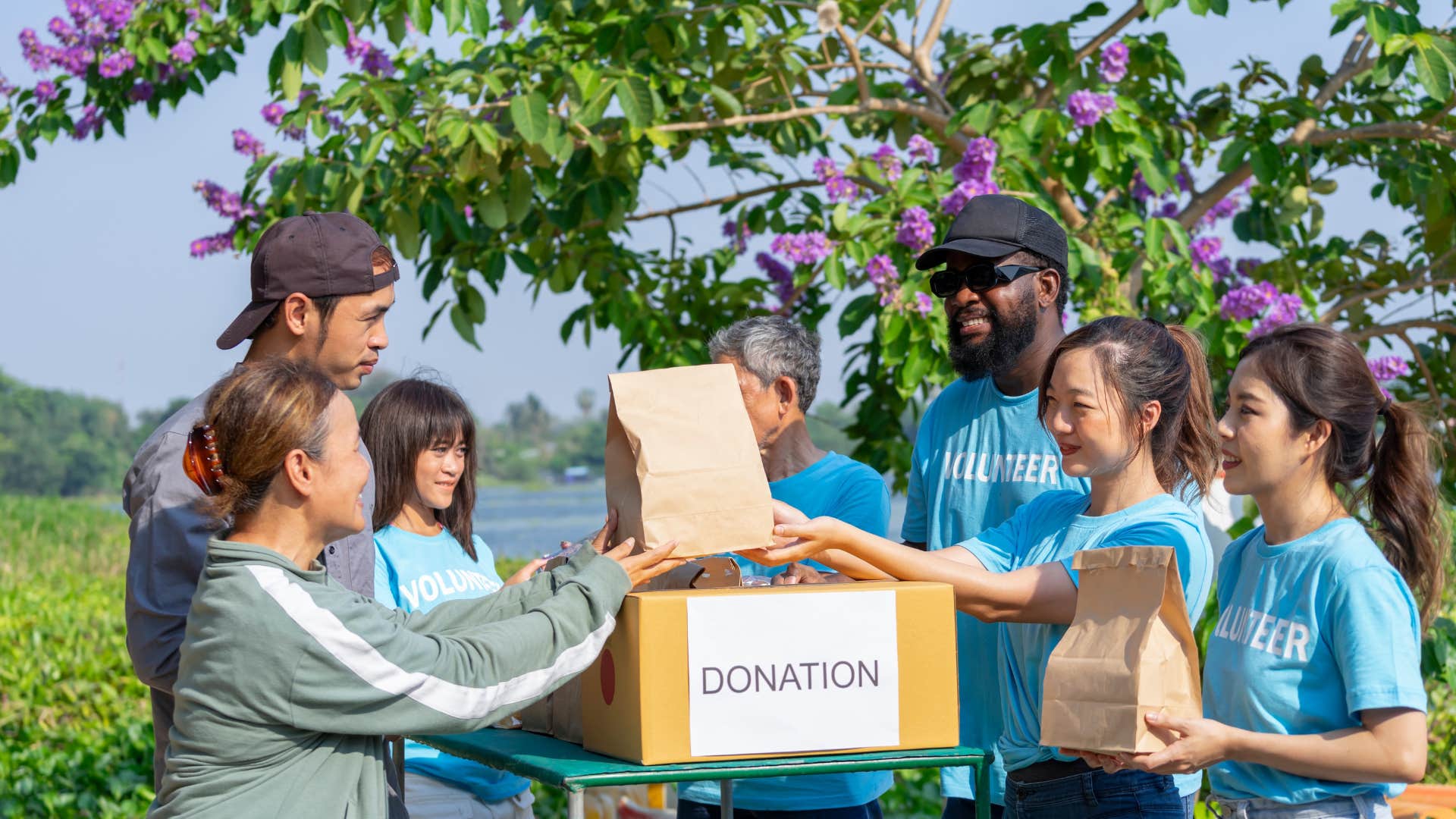
 Polina Tankilevitch | Pexels
 Being able to make donations to charity is considered one of the most satisfying aspects of having money. But you can still be a philanthropist, even if you're tight on funds. Giving back to the community and making charitable contributions is what the spirit of philanthropy is all about.
As the world’s sixth-wealthiest female billionaire and mega-philanthropist, Laurene Powell Jobs puts it, “To leave a mark — in a way that you think is important and lasting — that's a life well-lived.” So even if you can't afford to donate to your favorite nonprofits or charities regularly, you can still find meaningful ways to give back and become more philanthropic — on a budget.
Here are 7 simple habits of naturally generous people:
1. They give their time and mentorship
 Monkey Business Images / Shutterstock
Pay it forward like Oprah by inspiring and helping other women. Sadly, only 54 percent of women have access to senior leaders who act as mentors, so be charitable by mentoring a rising star in your industry so she can really soar. You can also give your expertise to your favorite cause by serving on the board.
Research from a Women's Leadership study found that 28% of women who had mentors at the workplace became senior leaders, compared to 19% of those without. That means your guidance could genuinely change someone's career trajectory. Employees who serve as mentors report significantly higher levels of job satisfaction and career satisfaction, and they think more highly of the companies they work for, too.
2. They don’t (necessarily) start their own non-profit
 PeopleImages / Shutterstock
I know it seems glamorous to start your own non-profit, but if your end goal is being helpful to those in need, think again. There are 1.5 million U.S. nonprofits already in existence, and they're in nearly every area. The problem is this: Each nonprofit spends a chunk on its own administration.
Think: If twenty hunger-fighting nonprofits merged, they could pay just one administrative group instead of 20 — and then the rest of the money could be used to fight hunger directly. So find a nonprofit already helping your cause and give to them.
3. They vote with how they spend their money
 maxbelchenko / Shutterstock
These days, there are good and evil choices for just about all of our buying decisions. A great way to do good every day is by making the most planet-friendly, worker-friendly, whatever-you-care-about-friendly decisions when doing what you do, from drinking beer to shopping to vacation planning.
A study in the Journal of the Association for Consumer Research confirms that prosocial consumer behavior encompasses any behavior that leads to an increased cost to oneself in order to achieve some benefit for others. This includes ethical purchasing and consumer advocacy or activism. So whether you're choosing fair-trade coffee, supporting a local business, or picking the brand that treats its workers well — even if you end up spending a few more dollars than you would somewhere like Amazon, you're extending your generosity beyond direct giving.
4. They influence the people in their lives to give
 Verin / Shutterstock
On average, women make less money than their male peers, but they still have a big influence on household spending — from home goods to philanthropy. Making philanthropy a key part of your relationships with your partners is critical, and millennial women are doing it en masse, according to a survey conducted by Fidelity Charitable. So, talk with your significant others, friends, and family about making philanthropic moves. Bonus points: Give the big spenders in your life the opportunity to sponsor a table for a charity gala.
5. They focus on quality, not quantity
 Rawpixel.com / Shutterstock
The same Fidelity Charitable survey found that fifty-five percent of millennial women support a wide variety of causes, which isn’t actually the most effective method of giving back. Due to fees-per-donation and other admin costs, giving $1,000 to one organization goes much further than giving $200 to five different ones. If you have trouble choosing, pick a charity that works on lots of issues, like the Global Fund for Women or the American Civil Liberties Union.
Millennial women tend to give spontaneously, as in donating a dollar on the spot at the checkout register or giving to a GoFundMe campaign when it flashes across Instagram. Keep doing that, but just don’t let those one-off donations make you feel like a good philanthropist who can stop giving. Instead, pick one to two organizations you really want to support, save up, and donate big and proud.
6. They set a target, and achieve it in their sleep
 Monkey Business Images / Shutterstock
Decide how much to give annually, and set up a separate bank account with automatic transfers each month. According to several of the largest charitable foundations, the average giver donates 3-5 percent of their adjusted gross income.
According to Dr. Adrian Sargeant, Professor of Fundraising at the Lilly Family School of Philanthropy at Indiana University, 70% of people who make an annual donation never make another to that organization. But here's what's interesting: 80% of donors who make recurring monthly donations continue to do so after the first year. And when it comes to how much to give, several of the largest charitable foundations report that the average income donated to charity ranges from just 3% to 5% of annual gross income.
7. They put their money where their mouth is
 Kmpzzz / Shutterstock
Women are more likely to give to charity — and to give more — than men in similar financial situations. And it’s truer today than ever before: Since the 2016 election, women’s giving to progressive causes has outpaced men’s dramatically. (P.S. Let's all keep fighting for those higher salaries so we can give even more.)
When it comes to values-driven giving, women put their money where their beliefs are. A study examining charitable behavior around the 2016 presidential election found that women's giving to progressive causes outstripped men's by sixfold in the week following the results, showing just how powerfully conviction can drive generosity.
The new tax codes make it harder to get tax breaks (unless you’re giving a lot). Ask your accountant for tips on charitable deductions, such as "bunching" a.k.a. saving for a few years and then donating one large sum to get the tax break. But research shows that most people give because it feels good, not for the tax break, so open your heart and your pocketbook and make it happen, either way.
And just in case you need a little more inspiration, here’s a final thought from mega-star and major philanthropist, Beyoncé: “We’re all in this together. Every one of us can make a difference by giving back.”
Emily Howe is a senior executive consultant with Portola Advisors. For 15+ years, as an expert in change management and business transitions, Emily has served large international companies, public and private universities, nonprofit and arts organizations, philanthropic groups, government entities, and individuals.
